Best Bird Feeder for Cardinals: 2026 Top Picks
 By perchandseeds.com Editorial Team · Updated October 15, 2026
How we research: this guide is based on manufacturer specifications, published data and verified customer feedback. Products are not personally tested unless marked “Tested by us”. Our process.
We may earn a commission when you buy through links on this site, at no extra cost to you. As an Amazon Associate I earn from qualifying purchases.
If you want cardinals to actually use a backyard feeder, pick a design with room to land: a platform, a hopper with broad perches, or a tube feeder with a cardinal ring. The right seed matters too; black oil sunflower and safflower are the usual go-tos, and our best bird seed for cardinals guide covers that side of the setup.
Below, we focus on current U.S. models that give cardinals real access without turning refilling and cleaning into a chore. The best choice depends on whether your biggest problem is squirrel pressure, limited space, or simply wanting the easiest perch for a larger songbird.
A good cardinal feeder should also stay easy to wash, keep seed dry, and be placed where birds are safe from windows. Local laws protect most wild birds, so the goal is observation and support, not disturbance.
Not sure which one to get? Answer a few quick questions.
Which Bird Feeder Fits Your Yard Best?Quick picks
Comparison table
| Model | Feeder style | Best for | Cardinal-friendly features | Notes | Check price |
|---|---|---|---|---|---|
| Brome Squirrel Buster Evolution | Tube-style | Smaller yards with squirrel pressure | Double cardinal ring, weight-activated shroud | Compact footprint; not a cure-all for larger nuisance animals | AmazoneBay |
| Brome Squirrel Buster Plus | Tube-style | Most yards needing a balanced all-around feeder | Cardinal ring, 6 ports, 5.1 lb capacity | Pole adaptor sold separately | AmazoneBay |
| Woodlink Absolute II (7536) | Double-sided hopper | Big perch room and heavy-duty use | Weight-sensitive adjustable perches, double-sided access | All-metal body; roof swings up for cleaning | AmazoneBay |
| Perky-Pet Red Cardinal Wild Bird Feeder (C00322) | Mesh cylinder with tray | Simple open access | Diamond-mesh surface, circular tray | Classic design with less squirrel resistance | AmazoneBay |
| Birds Choice Small Hanging Platform Bird Feeder in Blue Recycled Plastic (GSHPF100-LB) | Platform | Open, easy landing space | Wide tray, drainage screen | Excellent access; open design offers little squirrel protection | AmazoneBay |
Our picks in detail
Brome Squirrel Buster Evolution
Best for: Cardinals in smaller spaces where squirrel resistance still matters
A current U.S. model with a double cardinal ring and a 1.9 lb seed capacity.
Its weight-activated shroud is designed to close under squirrel pressure, while the patented water diversion helps keep seed drier.
- Seed capacity
- 1.9 lb
- Cardinal feature
- Double cardinal ring
- Squirrel control
- Weight-activated shroud
- Maintenance
- Tool-free disassembly
- Dimensions
- 16.5 x 16.5 x 48.3 cm
Pros
- Strong squirrel resistance for a cardinal feeder
- Compact footprint
- Easy to take apart for cleaning
Cons
- Smaller capacity than the Plus model
- Needs proper clearance to work correctly
- Will not deter every larger nuisance animal
Brome Squirrel Buster Plus
Best for: A balanced feeder for yards that need both cardinal access and stronger squirrel control
This is the larger-capacity Brome option, with a cardinal ring, six feeding ports, and a weight-activated shroud.
The 28-inch height and detachable parts make it a strong fit when you want more birds at once without giving up anti-squirrel features.
- Seed capacity
- 5.1 lb
- Ports
- 6
- Cardinal feature
- Cardinal ring
- Squirrel control
- Adjustable weight-activated shroud
- Mounting note
- Pole adaptor sold separately
Pros
- Large capacity
- Good cardinal access
- Chew-proof materials and serviceable parts
Cons
- Pole adaptor is sold separately
- Needs clearance around the feeder to work well
- Not designed to stop every larger nuisance animal
Woodlink Absolute II (7536)
Best for: Birders who want a sturdy, roomy feeder that cardinals can approach from either side
This double-sided, squirrel-resistant feeder gives larger songbirds more room to settle in than a narrow tube feeder.
An all-metal body and swing-up roof make it a practical choice when you want durability and easier refilling.
- Seed capacity
- 12 lb
- Feeding style
- Double-sided feeder
- Bird-friendly feature
- Adjustable perches
- Maintenance
- Roof swings up for cleaning and filling
- Made in USA
- Yes
Pros
- Very large capacity
- Sturdy all-metal build
- Easy to access for refilling and cleaning
Cons
- Bulkier than smaller feeders
- Open access can attract larger birds too
- No built-in cardinal ring
Perky-Pet Red Cardinal Wild Bird Feeder (C00322)
Best for: A simple classic feeder that gives cardinals plenty of perching surface
The diamond-mesh cylinder plus circular tray creates an easy landing area for cardinals and other perching birds.
Its all-metal, zinc-plated finish and collapsible design make it a straightforward option for everyday backyard use.
- Seed capacity
- 2.5 lb
- Feeding style
- Diamond-mesh cylinder with tray
- Finish
- Zinc-plated, rust-resistant
- Convenience
- Collapsible storage
- Included hardware
- Built-in hook
Pros
- Very easy for cardinals to use
- Compact and simple
- All-metal construction
Cons
- Less squirrel resistance than weight-activated feeders
- Mesh styles can spill more seed
- Needs regular cleaning to stay sanitary
Birds Choice Small Hanging Platform Bird Feeder in Blue Recycled Plastic (GSHPF100-LB)
Best for: The easiest open landing zone for cardinals
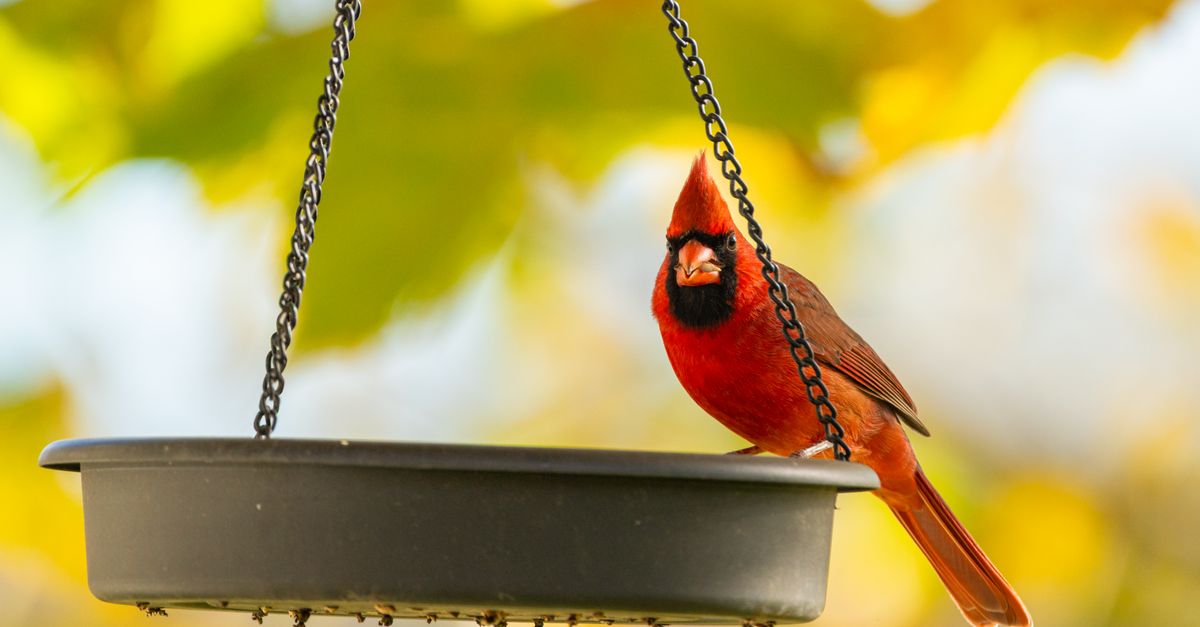
A platform feeder is often the most cardinal-friendly design, and this model gives birds a wide, open place to land.
The stainless drainage screen and recycled poly lumber make it a practical choice for birders who want easier cleanup and better weather drainage.
- Size
- 10 x 10 x 2.125 in
- Capacity
- 1.25 lb
- Material
- Recycled poly lumber
- Drainage
- Stainless drainage screen
- Made in USA
- Yes
Pros
- Excellent access for cardinals
- Good drainage
- Easy to clean and refill
Cons
- Open design offers little squirrel protection
- Seed is more exposed to weather
- Smaller capacity than larger feeders
What cardinals need from a feeder
If you are comparing feeder styles, start with bird size, not the marketing label. Cardinals are larger songbirds, so they do best with a wider perch or tray and a stable place to land. If you are still narrowing down style, the broader bird feeders buying guide explains the main feeder families.
A feeder that keeps seed dry and is easy to clean will do more for cardinal visits than a clever-looking design that is hard to service.
- Broad landing areas matter more than tiny ports.
- Drainage and a roof help keep seed from spoiling.
- A sturdy mounting point matters for a larger bird and occasional squirrel pressure.
- Wider access usually helps cardinals more than narrow tube openings.
Platform and hopper feeders
Platform feeders and hopper feeders are usually the easiest cardinal fit because they give birds a real place to land and turn around. That matters for a bird that is larger and more cautious than a finch.
The trade-off is that open access can also invite more weather exposure and, in some yards, more competition from larger birds.
- Best for cardinals that avoid tiny perches.
- Often easiest to watch from a distance.
- Can expose seed to rain if the design lacks a roof or drainage.
Tube feeders with a cardinal ring
Tube feeders can work well when they have a cardinal ring or broad perch system, because the ring gives cardinals a stable place to brace while they feed.
This style is helpful if you want a smaller footprint or stronger squirrel resistance than an open tray, but plain narrow tube feeders are often less comfortable for cardinals.
- Good compromise when space is limited.
- Better than a plain tube for larger songbirds.
- Usually works best with sunflower or safflower seed.
How the top picks stack up
If squirrels are the main problem, the Brome models are the most balanced choices. If you want the easiest landing zone, the Birds Choice platform feeder is the most open and comfortable. If you want a sturdy, roomy feeder with broad access from both sides, the Woodlink Absolute II stands out.
There is no single perfect feeder for every yard. The best choice depends on whether you care most about squirrel resistance, perch room, easy cleaning, or a classic look that cardinals seem to understand right away.
- Choose Brome Squirrel Buster Plus when you want the strongest all-around mix of cardinal access and squirrel control.
- Choose Brome Squirrel Buster Evolution when you want a compact feeder with the same kind of anti-squirrel approach.
- Choose Woodlink Absolute II when you want the biggest, toughest feeder on this list.
- Choose Birds Choice when you want an open platform that cardinals can use immediately.
- Choose Perky-Pet Red Cardinal when you want a simple classic feeder with a tray and lots of landing surface.
When squirrel control matters most
If your feeder is under constant pressure from squirrels, a weight-activated design is usually the smarter choice than an open tray. For a deeper look at the trade-offs, see our best squirrel proof bird feeder roundup.
The Brome feeders are the best fit here because they still give cardinals a real feeding position while using the squirrel to trigger the closure mechanism.
- Best for active squirrel pressure.
- Needs proper clearance to function well.
- Works best when mounted securely and kept clean.
When maximum perch room matters most
If cardinals in your yard prefer a larger, less fussy landing area, the Woodlink and Birds Choice feeders are easier to approach. They are not as selective as a squirrel-activated tube, but they are usually more comfortable for larger birds.
This is the better path if you care more about immediate cardinal access than about keeping every seed port closed to other birds.
- Best for easy landings and easy observation.
- More open access can mean more competition.
- Usually easier for a cardinal to understand on day one.
Placement, squirrel control, and window safety
Weight-activated feeders only work if squirrels cannot reach them from above, below, or nearby branches. Brome recommends about 18 inches of clearance around the feeder so the shroud can close properly. If you need more ideas for persistent backyard raiders, see our how to keep squirrels off a bird feeder guide.
For window safety, place feeders either under 3 feet from glass or more than 30 feet away. That reduces the chance of birds hitting reflective windows while still letting you enjoy the view.
- Use a sturdy hook or pole that can support the feeder when full.
- Keep the feeder away from launch points such as railings, deck edges, and overhanging branches.
- Do not use sticky products or poison bait to deal with squirrels or other pests.
- If your feeder has a squirrel mechanism, give it enough room to move freely and clean it regularly.
What 18 inches of clearance means
That spacing is there so the feeder can close before a squirrel can stay balanced on it. If a squirrel can brace itself on a post, branch, or nearby hook, the mechanism may not work as intended.
In practice, that means you should think about the whole setup, not just the feeder itself: mount, hook, branch reach, and even the path a squirrel might take to jump in.
- Clearance matters above, below, and to the sides.
- Avoid placing the feeder under an easy leap from a fence or patio structure.
- Check the setup after wind or storms shift branches.
Cleaning and bird health
Cardinals return more often when the feeder smells clean and the seed stays dry. Wet seed clumps, molds, and attracts pests, so regular washing is not optional. For a step-by-step routine, see how to clean a bird feeder.
Empty soggy seed, scrub the feeder, rinse well, and let it dry fully before refilling. Feeders with drainage, roofs, or easy disassembly are simply easier to keep sanitary.
- Clean more often after rain, snow, or humid weather.
- Replace seed if it smells musty or has visible clumps.
- Do not let old seed pile up in trays, mesh, or corners.
- Keep feeders away from active nests; local laws protect most wild birds, and you should never disturb nests or handle wildlife.
Why drainage and ventilation matter
Seed that stays damp becomes less appealing fast, and some feeders hold moisture longer than others. A drainage screen, open tray, or roof can make a real difference in how often you need to swap out spoiled seed.
If you live in a wet or humid climate, this is one of the biggest trade-offs between open cardinals-friendly feeders and sealed, more selective designs.
- Better drainage usually means less waste.
- Open trays dry faster but expose seed to weather.
- A design that breaks down easily is easier to keep clean.
FAQ
Do cardinals prefer platform or hopper feeders?
Usually yes. Cardinals are larger songbirds, so they feed more comfortably when they can land on a wide tray or broad perch instead of balancing at tiny ports. A hopper can also work well if the perches are roomy enough.
Can cardinals use tube feeders?
Yes, but only the right kind. Look for a tube feeder with a cardinal ring or wide perches; a plain narrow tube is usually less comfortable for cardinals and can be frustrating for larger birds.
What seed is best for cardinals?
Black oil sunflower and safflower are the standard choices because cardinals handle them well and they work in both open and tube-style feeders. See our best bird seed for cardinals guide for more detail.
How do I keep squirrels off without hurting birds?
Use weight-activated feeders, baffles, and careful placement. For more options, see our how to keep squirrels off a bird feeder guide. Avoid sticky traps, poison, or anything else that can harm non-target wildlife.
How often should I clean a cardinal feeder?
Regularly, and more often after rain, snow, or humid weather. If seed is clumped, musty, or visibly dirty, empty it out and wash the feeder. Our how to clean a bird feeder guide walks through the routine.
How far from windows should I place it?
Either under 3 feet from glass or more than 30 feet away. That placement reduces the risk of window strikes. Avoid putting feeders where birds will fly directly into reflective glass or get trapped between the feeder and a window.
The bottom line
For most yards, the best bird feeder for cardinals is either a wide-open platform style or a squirrel-resistant feeder with a real cardinal ring. If squirrel pressure is high, the Brome Squirrel Buster Plus is the most balanced all-around choice; if you want the easiest landing zone, the Birds Choice platform feeder is the simplest fit.
Whatever you buy, pair it with the right seed, keep it clean, and place it safely away from window hazards. Cardinals are not hard to please once the feeder gives them space, stability, and fresh food.
Reader experiences
Own one of these? Your experience helps other readers decide.