Best Bird Feeder for Blue Jays: 2026 Top Picks
 By perchandseeds.com Editorial Team · Updated October 29, 2026
How we research: this guide is based on manufacturer specifications, published data and verified customer feedback. Products are not personally tested unless marked “Tested by us”. Our process.
We may earn a commission when you buy through links on this site, at no extra cost to you. As an Amazon Associate I earn from qualifying purchases.
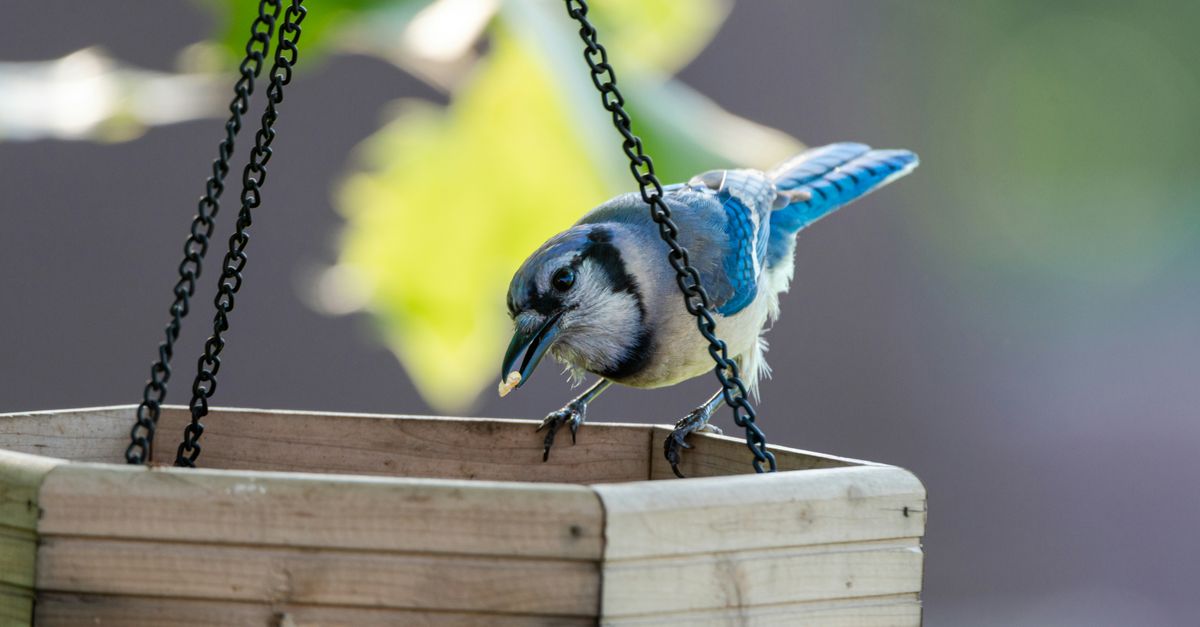
For blue jays, the best feeder is usually a large, sturdy platform or tray with plenty of landing room. A dedicated nut feeder or a roomy hopper can also work well if your goal is peanuts, sunflower seed, and fewer weather problems.
If you want the quick answer, choose a platform feeder for the most natural blue jay setup, a peanut feeder for the most targeted feeding, or a squirrel-resistant hopper if you want more protected seed. If squirrels are a constant problem, start with how to keep squirrels off a bird feeder.
Whichever style you buy, clean it regularly, keep wet seed from sitting out, and place it where birds can feed without crowding a window. Local and federal laws protect most wild birds, so never disturb nests or handle birds.
Not sure which one to get? Answer a few quick questions.
Which Bird Feeder Fits Your Yard Best?Quick picks
Comparison table
| Model | Type | Best for | Key specs | Main trade-off | Check price |
|---|---|---|---|---|---|
| Nature's Way Cedar Hanging Platform Feeder CWF3 | Platform feeder | Most natural blue jay setup | 12 x 12 x 2.25 in; 2 qt capacity; cedar; stainless-steel screws; removable tray; drainage | Open to weather and less squirrel-resistant on its own | AmazoneBay |
| Brome Squirrel Buster Nut Feeder 1053-V01 | Nut / peanut feeder | Shelled peanuts and nut mixes | 1.3 lb capacity; two interchangeable meshes; weight-adjustable squirrel-proof shroud; chew-proof parts; tool-free disassembly | Smaller capacity and not meant for broad seed mixes | AmazoneBay |
| Perky-Pet Squirrel-Be-Gone Max Bird Feeder with Flexports - 4 Lb 334-1SR | Hopper feeder | Protected seed feeding | 4 lb capacity; 4 feeding stations; Seed Shield; Sure-Lock cap; ladder-style perches | More plastic parts to wear over time and less open than a tray | AmazoneBay |
Our picks in detail
Nature's Way Cedar Hanging Platform Feeder CWF3
Best for: Most blue jay-friendly all-around feeder
This 12-inch cedar platform gives blue jays the open landing space they like, and the removable seed tray makes it easy to refresh food without narrow ports getting in the way.
It accepts sunflower, mixed seed, and peanuts, and the built-in drainage and airflow help keep food from sitting in moisture for too long. If you want the simplest blue-jay-friendly shape, this is it.
- Type
- Platform feeder
- Capacity
- 2 qt
- Size
- 12 x 12 x 2.25 in
- Materials
- Cedar; stainless-steel screws
- Foods
- Sunflower, mixed seed, peanuts
Pros
- Open landing area suits larger birds like blue jays
- Drainage and airflow help seed stay drier
- Removable tray makes routine refills easier
- Good general-purpose choice for a mixed backyard
Cons
- Open design exposes seed to weather
- Does not stop squirrels by itself
- Can create more cleanup if birds scatter seed
Brome Squirrel Buster Nut Feeder 1053-V01
Best for: Shelled peanuts and nut mixes for targeted blue jay feeding
If peanuts are the main event, this is the most targeted blue jay option in the group. It is designed for shelled peanuts and other nut foods, and blue jays are explicitly one of the birds it serves.
The weight-adjustable squirrel guard, chew-proof parts, and tool-free disassembly make it a strong fit for busy yards where squirrels are persistent. It is more specialized than a tray feeder, so think of it as a peanut station rather than a general seed feeder.
- Capacity
- 1.3 lb
- Food types
- Shelled peanuts, nuts, dried fruit, suet nuggets
- Squirrel control
- Weight-adjustable squirrel-proof shroud
- Construction
- Chew-proof parts
- Cleaning
- Tool-free disassembly
- Meshes
- Two interchangeable meshes
Pros
- Very strong match for blue jays that come for peanuts
- Excellent squirrel resistance for a specialty feeder
- Tool-free disassembly helps with cleaning and refilling
- Chew-proof parts are a plus in squirrel-heavy yards
Cons
- Smaller capacity than a tray or hopper
- Not meant for broad mixed-seed feeding
- Works best with shelled nuts rather than general seed
Perky-Pet Squirrel-Be-Gone Max Bird Feeder with Flexports - 4 Lb 334-1SR
Best for: Protected seed feeding when you want blue jays and other larger birds at one station
This hopper-style feeder keeps seed more sheltered than an open tray, which can be helpful in wet weather or in busy yards. Perky-Pet lists it as suitable for blue jays and cardinals, and the four ports give bigger birds room to feed.
It works with black-oil sunflower, sunflower chips, mixed seed, and safflower. The trade-off is that some verified customer feedback points to wear on the Flexports over time, so it is best if you value coverage and capacity more than all-metal simplicity.
- Capacity
- 4 lb
- Feeding stations
- 4
- Food types
- Black-oil sunflower, sunflower chips, mixed seed, safflower
- Features
- Seed Shield; Sure-Lock cap
- Perches
- Ladder-style perches
Pros
- Seed is more protected from weather than on an open tray
- Four feeding stations help multiple birds use it
- Useful if you want a broader seed-feeding setup
- Good middle ground between open and fully enclosed feeding
Cons
- Plastic Flexports can be a wear point over time
- Less open access than a platform feeder
- Not as targeted for peanuts as a nut feeder
What blue jays need from a feeder
Blue jays do best on feeders that feel stable and open. They are larger than most backyard songbirds, so narrow tubes and tiny perches usually make less sense than a broad tray or a feeder with a solid landing zone. Open access also makes it easier to offer peanuts, which are one of the most reliable blue jay foods.
If you are choosing between feeder families, the broader Bird Feeders: The Complete Buying Guide for 2026 overview can help, but for blue jays the decision usually comes down to three things: room, food, and durability.
- Wide landing space for a larger bird
- Sturdy mounting or hanging hardware
- Drainage or weather protection
- Easy cleanup and refill access
- Food that is easy to spot from a distance
The three feeder styles that work best
Based on manufacturer specs and the patterns that show up in verified customer feedback, these are the feeder styles that give blue jays the best odds. The right choice depends on whether you want the easiest landing zone, the most targeted peanut setup, or the most protected seed hopper.
Platform feeder: best overall
An open platform or tray is the most blue jay-friendly option because it gives the bird room to land, scan, and leave. The Nature's Way Cedar Hanging Platform Feeder CWF3 is the cleanest example of that idea: a roomy cedar platform, a removable seed tray, and drainage that helps keep food from getting soggy.
This style is the best default if you want blue jays first but still want chickadees, finches, titmice, and other visitors to share the space. It is also the easiest style to understand at a glance: if a bird can land comfortably, it can feed comfortably.
- Best when you want a broad mix of blue jays and other larger birds
- Works with sunflower, mixed seed, and peanuts
- Easier for birds to approach than a narrow tube
- More exposed to weather and seed scatter than enclosed feeders
Nut feeder: best for focused blue jay feeding
If peanuts are the main event, the Brome Squirrel Buster Nut Feeder 1053-V01 is the most targeted option here. It is built for shelled peanuts and other nut foods, and blue jays are explicitly among the birds it is designed to serve. The squirrel-proof shroud and chew-resistant parts are a real advantage in busy yards.
This is the pick for readers who want a feeder that does one job well. It is not the most versatile choice, but it is the one most likely to feel purpose-built for blue jays that arrive specifically for nuts.
- Best when you want to serve shelled peanuts or nut blends
- Helpful in yards where squirrels empty feeders first
- More specialized than a platform feeder
- Smaller capacity than a broad tray or hopper
Hopper feeder: best protected seed feeder
The Perky-Pet Squirrel-Be-Gone Max Bird Feeder with Flexports - 4 Lb is the best middle ground if you want seed coverage and multiple feeding stations. The enclosed hopper helps protect seed from weather, and the four ports make it easier for blue jays to feed alongside other birds.
This is a strong option if you want a feeder that looks and acts more like a traditional seed station. It is not as open as a platform feeder, but it does offer more weather protection and a neater seed presentation than a tray.
- Best for black-oil sunflower, sunflower chips, mixed seed, and safflower
- Useful if you want less exposed seed
- Can serve several birds at once
- Some plastic parts are a wear point in customer feedback
Placement and squirrel control matter as much as the feeder
Blue jays will use a feeder more often if it is easy to approach but not easy for squirrels to leap onto. That usually means hanging or mounting it with clear space on all sides and keeping it away from railings, tree trunks, and branches.
A good rule of thumb is generous clearance; at least 18 inches of open space around the feeder helps, and more distance is better when squirrels are active. For more ideas, see how to keep squirrels off a bird feeder.
- Keep it away from branch tips and rooflines
- Use a pole, baffle, or other barrier if needed
- If it is near a window, use collision-prevention decals or move it farther away
- Avoid hanging it where raccoons can reach easily
- Do not use sticky, poison, or glue-based pest control
Food, cleaning, and bird safety
Plain unsalted peanuts are usually the strongest blue jay draw. Sunflower seed works well too, especially black-oil sunflower or sunflower chips. Skip flavored, salted, or coated nuts, and avoid peanut butter in hot weather because it can go rancid and create a mess.
Feeders should stay clean. Wet seed, hull buildup, and droppings can spread disease, so follow the maker's instructions and clean frequently, especially in damp or warm weather. If you need a refresher, how to clean a bird feeder properly covers the basics. If you are starting from scratch, how to attract birds to your yard explains the bigger picture of food, water, and cover.
Local and federal laws protect most wild birds, so if you see nesting behavior, leave it alone and never handle birds or disturb nests.
- Use plain, unsalted, unflavored food
- Discard moldy or wet seed immediately
- Clean on a regular schedule, and more often in warm or wet weather
- Keep feeding areas dry and ventilated
- Never disturb nests or handle wild birds
FAQ
What is the best feeder type for blue jays?
An open platform feeder is usually the best overall choice because blue jays need room to land and prefer easy access to peanuts and sunflower seed. If peanuts are your main food, a nut feeder is the next best option.
Do blue jays prefer peanuts or sunflower seed?
Peanuts are often the strongest draw, especially plain unsalted peanuts or shelled peanuts. Black-oil sunflower and sunflower chips also work well, particularly in a tray or hopper feeder.
Are hopper feeders good for blue jays?
Yes, especially if you want seed to stay drier or you want a feeder that serves several species. They are not as open as platform feeders, so they are usually the second choice behind a tray.
How do I keep squirrels from taking blue jay food?
Use a squirrel-resistant feeder, keep clear space around it, and avoid placing it near jump points like branches or railings. For more tactics, see how to keep squirrels off a bird feeder.
How often should I clean a feeder for blue jays?
Clean it regularly, and more often in warm or wet weather. Remove wet seed quickly and follow how to clean a bird feeder properly so mold and bacteria do not build up.
Can I use a window feeder for blue jays?
Usually not the best choice. Blue jays are larger birds, and window placement raises collision risk; if you do use one, add collision-prevention measures and keep the glass area safe.
The bottom line
If you want the best blue jay feeder in most yards, start with a roomy platform like the Nature's Way CWF3. It gives blue jays the open space they like and works with the foods they actually eat.
If peanuts are your main goal, pick the Brome nut feeder. If you want covered seed and multiple feeding ports, the Perky-Pet hopper is the more protected option. No matter which you choose, keep it clean, use plain food, and place it with bird safety in mind.
Reader experiences
Own one of these? Your experience helps other readers decide.