How we research: this guide is based on manufacturer specifications, published data and verified customer feedback. Products are not personally tested unless marked “Tested by us”. Our process.
We may earn a commission when you buy through links on this site, at no extra cost to you. As an Amazon Associate I earn from qualifying purchases.
Birdhouses and bird baths solve different problems. A house supports cavity-nesting birds such as bluebirds and wrens; a bath helps many backyard birds drink and preen.
This guide covers how to choose the right type, which features matter, and how to avoid the most common placement and maintenance mistakes.
If you are comparing exact nest-box sizes or hole diameters, the free Birdhouse Size Guide is a useful first check.
Quick picks
Comparison table
| Option | Best for | Main trade-off | Setup note | Check price |
|---|---|---|---|---|
| Bluebird nest box | Eastern bluebirds in open habitat | Must match hole size and habitat | Use a stable mount and confirm the placement before installing. | — |
| Wren house | Wrens and other small cavity nesters | Smaller opening means fewer compatible species | Keep it near appropriate cover, not heavy predator traffic. | AmazoneBay |
| Standard bird bath | Most backyard birds in mild weather | Needs regular cleaning and refilling | Place it where birds can see danger and where you can reach it easily. | — |
| Solar bird bath fountain | Moving water without plugging in | Depends on sun and still needs cleaning | Keep the basin shallow and the panel in direct sun. | — |
| Heated bird bath | Cold-climate yards with freeze-up | Needs safe outdoor power and a stable stand | Use outdoor-rated power and inspect cords often. | — |
Our picks in detail
WoodLink BB3 Traditional Bluebird House
Best for: Eastern bluebirds in open yards
Cedar bluebird box with a 1-9/16-inch entrance hole.
Includes drainage holes, ventilation slots, and a predator guard.
Still sold on WoodLink's official product list.
- Material
- Cedar
- Entrance hole
- 1-9/16 inches
- Dimensions
- 15 H x 7.125 W x 7 D inches
- Current status
- Still sold on WoodLink's official product list
Pros
- Bluebird-specific sizing
- Functional weather-management details
- Simple to mount
Cons
- Species-specific, so placement matters
- Needs seasonal cleanup
Wild Wings WWCH3 Cedar Blue Bird Box House
Best for: Bluebirds
Bluebird-specific cedar house with air vents through wall and floor openings.
Includes a clean-out door for easy seasonal cleaning.
Predator guard and interior fledgling kerfs are built in.
- Product dimensions
- 5.5"D x 8.13"W x 12"H
- Material
- Cedar wood construction
- Target species
- Bluebird
- Ventilation
- Air vents through wall and floor openings
- Cleaning access
- Clean-out door for easy seasonal cleaning
- Protection details
- Predator guard plus interior fledgling kerfs
Pros
- Species-specific for bluebirds
- Built-in ventilation openings
- Easy seasonal cleaning
- Predator guard and interior fledgling kerfs
Cons
- Only suitable for bluebirds
- Needs routine cleaning and proper placement
Traditional Cedar Wren House with Clean-Out Door (CWH1)
Best for: Wrens and chickadees that need a compact cavity box
Premium cedar wren house with a 1 1/8-inch opening.
Includes clean-out access, ventilation, and a vinyl-coated hanging cable.
Current brand listing can show sold out or preorder, so check availability before you plan on it.
- Material
- Premium cedar
- Entrance hole
- 1 1/8 inches
- Dimensions
- 8 H x 8 7/8 W x 8 1/8 D inches
- Warranty
- 3 years
- Current status
- Still sold on Nature's Way's site; may show sold out or preorder
- Mounting
- Vinyl-coated wire hanging cable included
Pros
- Sized for smaller cavity nesters
- Easy seasonal cleaning
- Solid build and useful access features
Cons
- Smaller opening limits species
- Availability can fluctuate
API / Miller Manufacturing Heated Birdbath with Stand (SKU 970)
Best for: Winter water in cold climates
20-inch heated bird bath with a 30-inch metal stand.
Manufacturer lists 150W, 120V, 60Hz and CSA listing.
A practical winter-water option when freeze-up is a recurring issue.
- Bowl size
- 20 inches
- Stand
- 30-inch metal stand
- Power
- 150W, 120V, 60Hz
- Certification
- CSA listed
- Current status
- Still sold on Miller Manufacturing's site
Pros
- Keeps water available in freezing weather
- Stand included
- Current electric design
Cons
- Needs safe outdoor power and cord management
- Requires regular winter checks
Birdhouses and baths solve different jobs
A birdhouse only works when the birds in your yard actually need a cavity. A bath is broader: many birds will use clean water even if they never touch a nest box.
If you are comparing older review pages, check the exact model number and current listing before you buy. Product families get refreshed, and the code can change even when the shape looks the same.
- Birdhouses are species-specific.
- Baths serve more species.
- Most yards get more immediate use from a simple bath than from a decorative house.
- Choose based on the birds you already see.
Cavity nesters first
Only some birds use birdhouses. Bluebirds and wrens are classic examples, but many backyard birds never choose a box at all.
That is why species match matters more than style. A box that looks charming can still be the wrong size or shape for the bird you want.
- Match the house to a bird that naturally nests in cavities.
- Do not expect every songbird to use a box.
- A decorative house is not the same thing as a functional nest box.
Water is the easiest universal upgrade
Birds use baths for drinking and preening, so a good bath can help a broad mix of species.
If you want quick results, a shallow, clean water source is often the simplest place to start.
- Keep bath water shallow and easy to reach.
- Refresh water often so it stays usable.
- Moving water can help, but the basics matter more.
What makes a birdhouse worth buying
The best birdhouse is built for a particular bird, not for decoration. Untreated cedar or another safe, durable material is a good default, and the box should include ventilation, drainage, and clean-out access.
Choose the entrance hole, box depth, and mounting style for the species you want. A perch is usually unnecessary; predator protection and easy cleanup matter more.
- Choose a model built for the exact bird you want.
- Make sure the entrance size matches the target species.
- Drainage holes keep standing water from collecting inside.
- Ventilation slots help in warm weather.
- Choose a clean-out design so you can service the box without damaging it.
- A predator guard is more useful than a decorative perch.
Bluebirds need a dedicated box
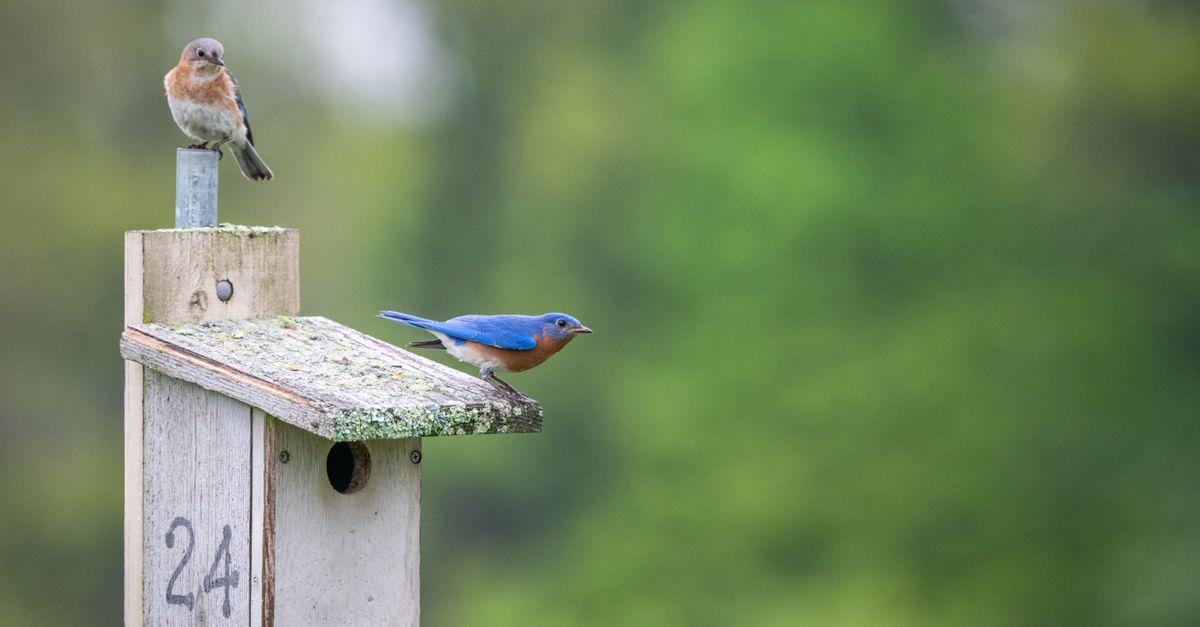
Bluebirds are the clearest example of why exact sizing matters. If eastern bluebirds are your target, use a box built for them instead of a general nest box.
For species-specific sizing and product ideas, see Best Birdhouse for Bluebirds: 2026 Picks.
- Use a bluebird-specific entrance size.
- Favor simple, functional construction over ornamentation.
- Do not assume a generic house will work for bluebirds.
Smaller houses are not just mini versions
Wrens and other small cavity nesters often need a smaller house, not just a smaller hole in a bigger box.
A wren house should fit the bird's size and behavior, which is why compact dimensions and an easy-open front can matter.
- Match the box to the bird's body size and nesting habits.
- Small cavity nesters may use places bluebirds will not.
- Keep the design simple and species-appropriate.
Where to put a birdhouse
Placement matters as much as the box itself. A correctly sized house can still fail if it is too close to predators, too crowded by brush, or mounted where birds do not feel safe.
For a step-by-step placement plan, see Where to Put a Birdhouse: Best Placement Guide. The right spot should fit the species, give birds a clear path in and out, and still let you clean the box after nesting ends.
- Favor open sight lines so birds can spot danger early.
- Use a pole or post with predator protection when the design calls for it.
- Keep boxes away from heavy disturbance and easy predator access.
- Do not open an occupied box.
- Remember that local and federal rules protect most wild birds and nests.
Common placement mistakes
A house placed in the wrong setting can stay unused even when the box is excellent.
The most common problems are hanging boxes with no predator control, putting a box too close to dense cover, and mounting it where you cannot inspect or clean it later.
- Avoid decorative hooks that offer no predator protection.
- Do not crowd the box into dense shrubs or tangled cover.
- Make sure the box can be serviced without disturbing an active nest.
Mounting and safety
A stable mount is more important than a fancy post cap. Boxes that sway or tip can discourage birds and make maintenance harder.
If the box or bath sits near glass, consider window-collision prevention on nearby windows so birds do not mistake reflections for open space.
- Stability beats decoration.
- Predator baffles help where they are appropriate.
- Glass nearby should be made safer if birds will fly past it often.
Choosing a bird bath
A bird bath should be shallow, stable, and easy to clean. Birds need a place to stand, drink, and preen without feeling trapped.
For standard bowls, see Best Bird Bath: 2026 Picks for Every Backyard. If you want moving water without a plug, compare Best Solar Bird Bath Fountain: 2026 Top Picks, but keep cleaning and shallow depth at the top of the list.
- Aim for about 0.5 to 1 inch of water at the edge and no more than 2 inches deep overall.
- Choose a base that will not tip easily.
- Pick a basin you can scrub and rinse without a struggle.
- Set it where birds can watch for predators.
- If the bath sits near a window, add window-collision prevention on the glass.
What shallow really means
Birds do not need a deep pool. They need a place to step in, drink, and preen without feeling trapped.
A gradual slope is helpful because it lets birds move into the water at their own pace.
- Keep the edges especially shallow.
- Avoid steep-sided bowls that feel risky to small birds.
- A textured or gently sloped basin is usually easier for birds to use.
Placement and visibility
Birds like water they can see clearly. A bath that is easy to spot from the air, but still gives birds a safe view of the area around them, is more likely to get used.
Keep the bath easy to refill and easy to clean. If you cannot reach it without a hassle, maintenance usually slips.
- Put the bath where birds can see danger approaching.
- Make sure you can reach it for frequent cleaning.
- Stability matters more than ornamental height.
When a heated bird bath is worth it
If your water freezes often, a heated bird bath is the simplest way to keep a usable water source in winter. It is most useful in yards with regular freeze-up, long cold stretches, or icing.
For winter-specific models, see Best Heated Bird Bath: 2026 Picks for Winter Water. A heated bath still needs a stable stand, outdoor-safe power, and regular winter checks.
- Choose heated only if freeze-up is a real problem in your yard.
- Use an outdoor-rated, GFCI-protected outlet.
- Keep the stand or mount stable in wind and frost.
- Check cords and plugs before the first cold snap.
- Do not let the heating setup become harder to clean than the bath itself.
When a standard bath is enough
If your winters are mild, a regular bath is often enough. In that case, spend your effort on a model that is easy to clean and difficult to tip.
A heated bath is a convenience and safety choice, not a requirement for every yard.
- Skip heat if freezing is rare.
- Choose a simple bath if you want the lowest upkeep.
- Let climate, not looks, decide whether heating is worth it.
Cleaning, disease prevention, and yard safety
Dirty water and neglected boxes can spread disease or become unsafe. Clean baths regularly, clean birdhouses only when empty and after the nesting season is over, and never disturb an active nest. Most wild birds and nests are protected by law.
Keep cats indoors, skip sticky or poison pest controls, and make nearby glass safer if birds will fly close to it. A clean, low-stress setup does more for birds than a decorative one that is hard to maintain.
- Rinse and scrub bird baths often enough that algae and droppings do not build up.
- Only clean nest boxes when they are empty.
- Do not handle wild birds or try to move a nest.
- Keep feeding areas tidy if you add feeders.
- Use stable mounts so the setup does not wobble or fall.
- Protect windows if birds fly close to them.
The easiest rule to remember
If birds have to choose between a clean, safe setup and a dirty or crowded one, they will usually skip the risky option.
Simplicity, cleanliness, and correct placement beat decorative features almost every time.
- Cleanliness is part of the product.
- Safety comes before style.
- Use easy-care designs if you know you will be busy.
Glass, pets, and nearby habitat
A birdhouse or bath should fit the whole yard, not just the object itself. Nearby glass, roaming cats, and cluttered cover can all turn a good idea into a risky one.
If you are building a full bird-friendly setup, start with safe water and the right nesting option, then add food and habitat around them.
- Protect windows if birds fly close to them.
- Keep cats indoors around bird habitat.
- Add food and shelter only after the basics are safe.
FAQ
Which birds use birdhouses?
Mostly cavity nesters such as bluebirds, wrens, and some other small species. Many backyard birds never use a house at all, which is why species-specific sizing matters.
Should birdhouses have perches?
Usually no. A perch is not needed for most nest boxes and can make the box easier for predators or unwanted visitors to use.
How deep should a bird bath be?
Keep it shallow: about 0.5 to 1 inch at the edge and no more than 2 inches deep overall. A gradual slope is easier for small birds to use.
Do I need a heated bird bath in winter?
Only if your water freezes often. In mild climates, a regular bath is usually enough. In cold climates, a heated bath is the easiest way to keep water available.
Where should I put a birdhouse?
Put it in the right habitat for the species, on a stable mount with predator protection when needed. The placement guide covers the details.
How often should I clean bird baths and birdhouses?
Clean bird baths regularly so algae and droppings do not build up. Clean birdhouses after the nesting season is over, and only when the box is empty.
Can I check or clean a birdhouse with an active nest?
No. Leave occupied nests alone, do not handle wild birds, and do not disturb an active box. Most wild birds and their nests are protected by law.
The bottom line
If you are choosing between a birdhouse and a bird bath, start with the birds already in your yard. Cavity nesters need the right box and placement; most backyard birds appreciate a shallow, clean bath.
Once the basics are right, the detailed guides on placement, bluebird boxes, winter water, and bath styles can help you choose a setup birds can actually use, not just one that looks nice.